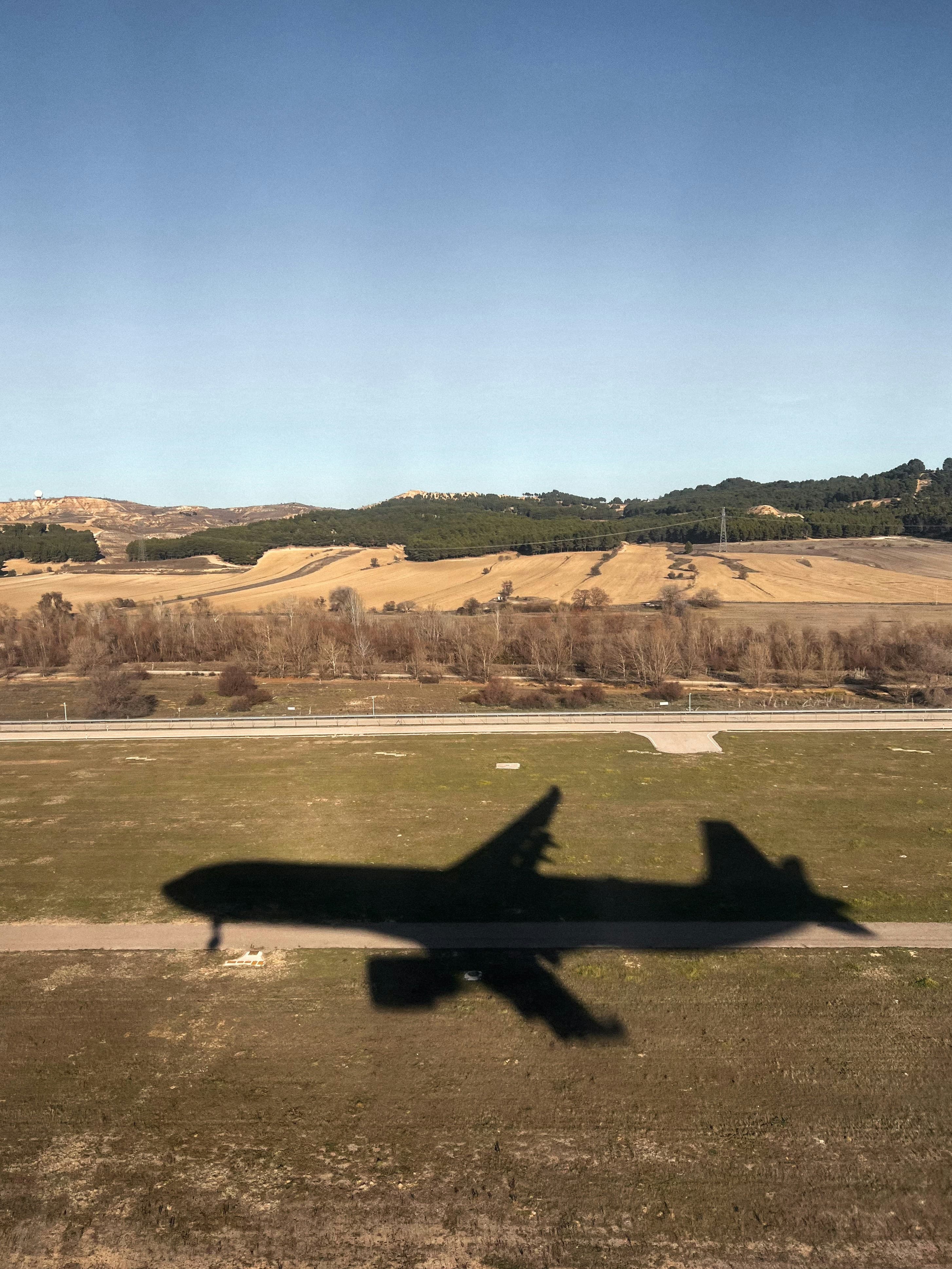
A month ago I flew back to Sevilla for my cousin's wedding. The flight was nothing special — eight hours, mediocre dinner, the usual half-sleep over the Atlantic. But I remember the exact moment we started descending into Madrid, and I caught myself thinking something I wasn't expecting: I'm going home. But I'm also leaving home. That sentence didn't make any sense. And yet it was completely true. I've been in Washington, D.C. for two years now. Not enough to call it home in any official sense — I still pay for my coffee in dollars I mentally convert into euros, I still feel a small shock every time I see a tip line on a receipt, I still don't fully understand what "Labor Day" is supposed to celebrate. But enough, apparently, that returning to Sevilla felt like returning to a version of myself I had to dust off.
Two operating systems
What I've come to realize — slowly, and not without some discomfort — is that I don't really have one personality anymore. I have two operating systems. The Sevilla one is quieter. It listens before it speaks. It assumes that everyone at the table already knows what you've achieved, so you don't bring it up. It values long lunches, the kind that bleed into the afternoon without anyone checking their watch. It treats ambition as a private matter — something you might have, but something it would be slightly rude to advertise. The D.C. one is the opposite. It introduces itself first. It tells you what it does before you ask. It treats networking events like a sport and "let's grab coffee" like a serious proposal. It assumes that if you don't say what you want, no one will guess. It treats ambition as a public virtue — something you wear, not something you hide. For a long time I thought one of these had to be more authentic than the other. That one of them was me and the other was a costume I had learned to put on. But I don't think that's true anymore. They're both me. They're just running on different operating systems, in different environments, optimized for different things.
The discomfort that taught me
The most useful thing about moving between two cultures isn't the moment you start to "fit in." It's the moment you stop assuming there's a correct way to be. When I first arrived in D.C., the discomfort I felt wasn't about not belonging. It was about being suddenly aware of a bubble I hadn't known I was inside. The way I greeted people, the way I asked questions, the things I considered polite, the things I considered direct — all of it had felt obvious to me. Universal, even. And in D.C., none of it was. That feeling isn't pleasant. Nobody enjoys realizing that what they assumed was normal is actually just familiar. But once you sit with it long enough, something shifts. You stop trying to translate every interaction back into your original language. You stop measuring people against the standards you grew up with. And you start to see what they're actually doing, on their own terms. That, I think, is where most of the real learning has happened these past two years. Not in classes. Not in books. In the small daily moments of getting it slightly wrong and noticing it.
What I didn't expect
The strange thing about having two operating systems is the way it changes how you connect with people from anywhere else. Once you've genuinely accepted that your way of doing things isn't the way — just a way — meeting someone from Brazil, or India, or Germany stops feeling like translating across a gap. It starts feeling like comparing notes. You ask different questions. You listen for different things. You stop assuming you understand, which is, paradoxically, when you actually start to. I don't think you need to live abroad to develop this. But living between two places makes it harder to avoid.
What I lost, what I kept
There's a cost — though not the one people usually assume. I'm not a different person in Sevilla and a different person in D.C. I'm the same person. The values are the same, the priorities are the same, the sense of humor is the same. What changes is the operating system underneath: the way I greet, the way I ask, the pace at which I speak, the things I leave unsaid. Same person, different protocols. But the trade is worth it. I don't have a single hometown anymore. I have two operating systems — and the space between them, which is starting to feel more like home than either one.